
DataYard Blogs
IT Insights, No Fluff.
Cloud, infrastructure, cybersecurity, colocation, and more. Browse by topic to find something specific.
Talk to our team →
Critical PHP Security Issue 10/21/2026
Security Alert: At a Glance Affected Appears to be present in all versions of PHP going back to version 5.4 Risk Remote code execution, allowing
WordPress Plugin Vulnerabilities in 2026: What Agencies and Site Owners Need to Know
In 2026, several WordPress plugins installed on millions of sites had serious cybersecurity vulnerabilities, and WordPress core itself shipped six security updates between July and October 2026. This post covers four major plugin vulnerabilities, the core security fixes released between those core security fixes, and practical steps to reduce risk. Plus, you will get a look at when managed WordPress hosting makes sense for agencies.

What We Know About Anthropic’s Claude Mythos Cybersecurity Capabilities
Anthropic’s newest AI model, Claude Mythos Preview, has been generating a lot of conversation in cybersecurity circles. Reports from Anthropic describe a model that may be capable of identifying previously unknown software vulnerabilities at scale, and some of our own clients have been asking what that means for their environments. Here’s what we know so far.
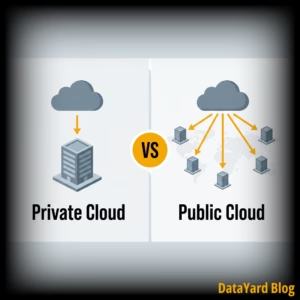
Private Cloud vs. Public Cloud: What’s the Difference and Which Is Right for Your Business?
Here’s how private and public cloud differ on cost, cybersecurity, and performance, and how to figure out which environment (or combination of both) actually fits what your business is running.
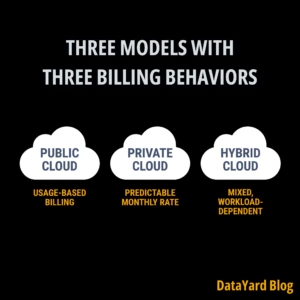
How to Build a Cloud Budget for 2027: Private, Public, and Hybrid Infrastructure
Do you have a server or cloud environment that hasn’t been reviewed in a while? Cloud budget planning starts with understanding what you are actually running and what it costs to keep it running. Here is what to account for in your 2027 budget, where costs tend to creep in, and what you should think twice about cutting.

The 3-2-1 Backup Strategy: What It Is and Where It Breaks Down
Three copies, two media types, one offsite. The 3-2-1 backup strategy is simple to state and easy to get wrong. Here is where implementations fall short, and how to audit yours.

Layered Security: Why Patching Alone Is Not Enough
Patching matters. It also cannot be the whole strategy. Here is what layered security means in practice, and what three recent incidents reveal about the layers that catch what patching misses.

Data Center Power Redundancy: How DataYard’s Dayton Facility Is Built
Data center power redundancy is about more than just backup equipment. It’s how utility power, UPS systems, backup generation, and transfer systems are designed to work together. Here’s what the terminology means, what to ask a provider, and how DataYard’s Dayton, Ohio facility is built to support private cloud and colocation clients.

Colocation vs. Cloud: How to Choose (and When to Use Both)
For years, businesses heard one message: move everything to the cloud. In practice, the decision is never that simple. The cloud is the right home for some workloads, colocation for others, and many businesses use a mix of both. This guide breaks down the differences across cost, control, security, and performance, and how to decide where your critical systems belong.
READY TO TALK TO AN EXPERT?
Finding the right technology to support your business can be a challenge – but we love a challenge. Let’s talk.
Get In Touch